Which Flowers Should You Avoid Sending to Cat Owners?
Avoid sending lilies, daylilies, tulips, daffodils and chrysanthemums to a home with cats. Lilies and daylilies are especially dangerous because even a small exposure can cause severe kidney injury.
Keep lilies out of the house
True lilies and daylilies pose a serious risk to cats. This includes Easter lilies, Asiatic lilies and many flowers sold as oriental lilies. Every part of these plants is dangerous, including the petals, leaves, pollen and water in the vase.
A bouquet does not have to be chewed to cause trouble. A cat might brush past a bloom on a table, get pollen on its coat and swallow it while grooming. For that reason, keeping lilies on a high shelf or in a room the cat can enter is not a reliable precaution.
Some flowers have lily in their common name but are not true lilies. Peace lilies and calla lilies are not in the same group as true lilies, but they can still irritate a cat's mouth and cause drooling or vomiting. They are best left out of a gift for a cat owner.
Other flowers to leave out
Tulips and daffodils are toxic to cats. Their bulbs contain particularly high concentrations of harmful substances, but the flowers and other plant parts can also cause problems. A spring arrangement may look harmless on the kitchen counter, yet a curious cat can pull at a stem or investigate a fallen petal.
Chrysanthemums are another flower to avoid. Eating them can cause signs such as vomiting, diarrhea and drooling. Florists may also call them mums, so check the full contents of a mixed bouquet rather than relying on its main flower.
Choose a safer bouquet
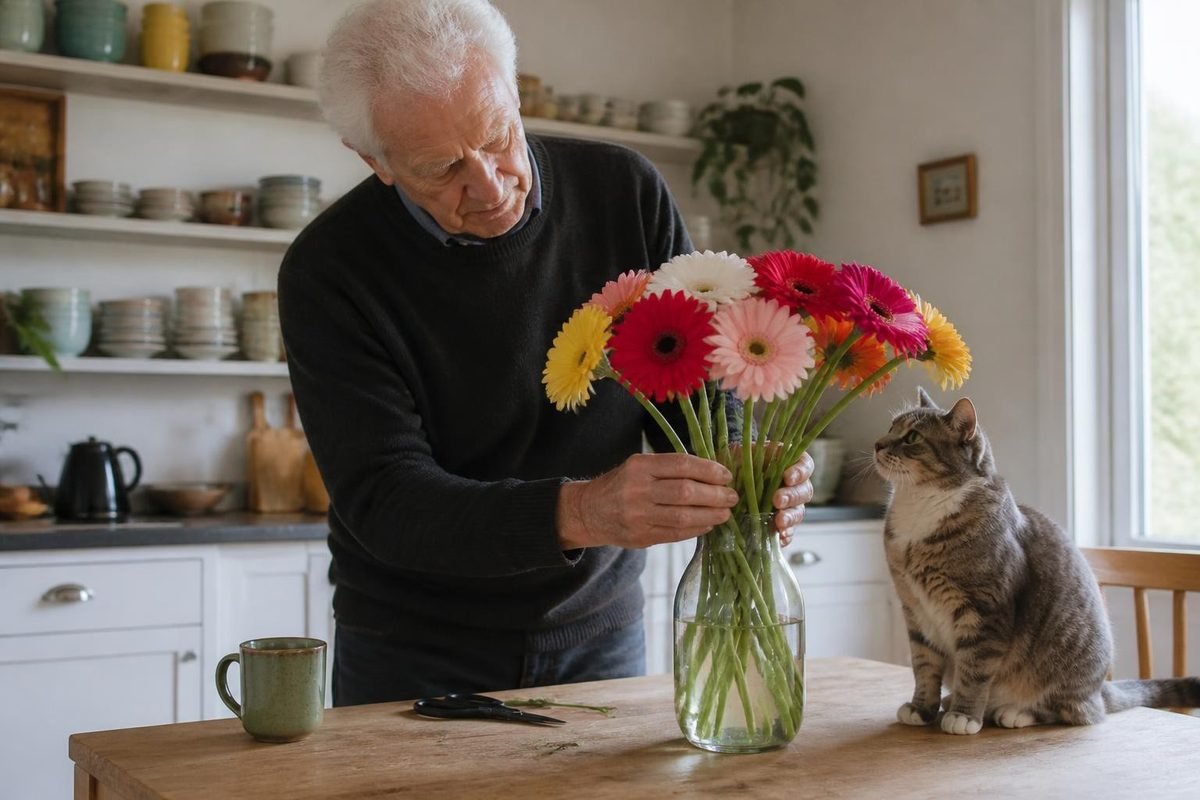
Roses, gerbera daisies and orchids are generally considered non toxic to cats. A simple arrangement of gerbera daisies can bring color to a room without the lily risk. Even so, eating any plant material may upset a cat's stomach, and rose thorns can cause injuries.
Ask for every flower and foliage stem to be identified. Greenery and filler flowers are not automatically safe just because the main blooms are. Skip floral preservatives if the cat might reach the vase water, and suggest placing the arrangement where the cat cannot knock it over.
What to do after an exposure
If a cat may have contacted a lily or daylily, call a veterinarian or animal poison control service immediately. Do not wait for symptoms. Early treatment matters, and a veterinarian can advise on the next steps.
For other suspected plant exposures, contact a veterinarian promptly and identify the flower if possible. Keep the plant or a photo of it for identification. Do not try to make the cat vomit unless a veterinarian tells you to.
Questions about flowers and cats
Can a cat get sick from lily pollen?
Yes. Pollen on the coat can be swallowed during grooming and may cause severe kidney injury.
Are dried lilies safe to send?
No. Keep dried lilies away from cats as well as fresh ones.
Are roses safe for cats?
Roses are generally non toxic, but thorns can injure a cat and chewing plant material may cause stomach upset.
What if I cannot identify a flower?
Ask the florist for its name before sending it. If a cat has already been exposed, contact a veterinarian and share a photo.
More to read: check this out